The Dutch-style windmill on the Weser embankment in Tündern was built in 1883. While the four bakeries in Tündern initially obtained their flour from the windmill, grain continued to be milled there as animal feed for the local farmers until 1960. Wind power could be used to drive the mill until 1941. However, a motor had already been installed in a small outbuilding in 1921 to ensure independence from wind and weather.
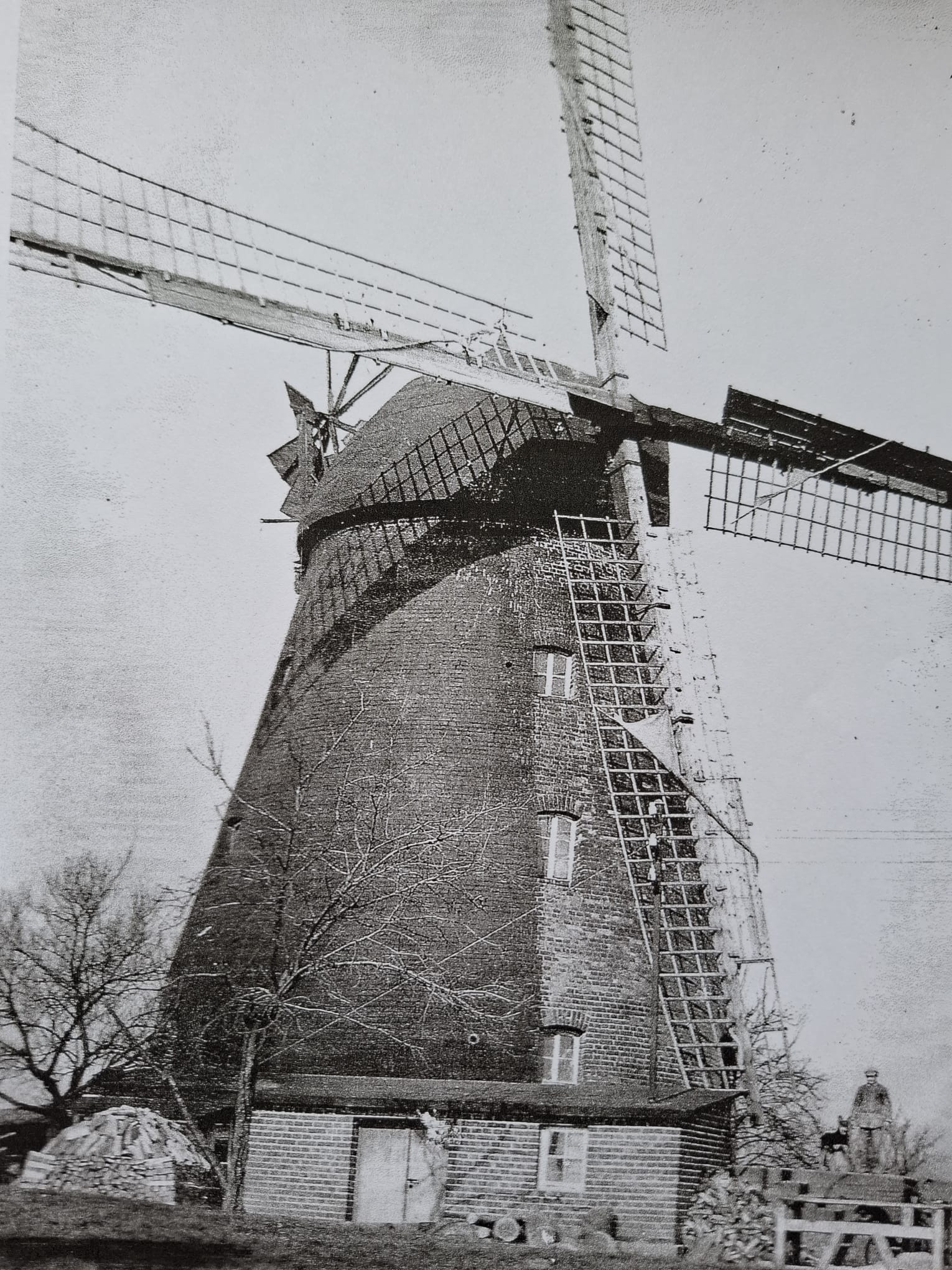
After the Second World War, a slow but steady decline of the mill set in. When the local heritage association “Tundrium” was founded in 1974, it took on the task of a thorough renovation and restoration of the windmill. With the help of many small and large donations, the mill was inaugurated in 1979 with a new roof and fresh plaster.
On the late evening of 27 July 1980, a severe thunderstorm swept over Tündern. Lightning struck the windmill, and it burned almost completely. The roof, mill cap, fantail and milling machinery were destroyed. Thanks to the commitment of many people and many helping hands, the reconstruction was completed just one year later. As a landmark of Tündern and a waypoint for the many cyclists on the Weser Cycle Route, it once again became a monument to traditional craftsmanship.
But the ravages of time had again taken their toll on the windmill. The wooden sails were rotten, the plaster had suffered from wind and weather, and the masonry was damaged. A thorough restoration was therefore urgently needed to preserve this architectural monument and make it accessible to the public again. For this purpose, we founded a support association on 15 August 2024.
Mills in Fairy Tales, Legends and Stories
The windmill in Tündern is located not only on Germany’s most popular cycle route, but also on the German Fairy Tale Route.
Have you ever noticed how often mills, the miller, the miller’s daughter or the miller’s son appear in fairy tales and stories? In the Grimms’ tales such as “Puss in Boots” or “Rumpelstiltskin”, through to the legend of “Krabat”, the miller’s trade does not always play a sympathetic role. In fact, the profession of miller was long considered dishonourable. Thieves and robbers were supposedly hidden in the mills. Nobody could know exactly what went on inside them. They were watched with suspicion, as mills lay outside the urban or village communities and were beyond social control. Added to this was the farmers’ dependence on the mills to have their grain processed. Only in the nineteenth century did attitudes change, and mills became an essential guarantor of the food supply.
We are bringing this traditional craft back to life at the Tündern windmill.